
What is Load Balancing in Microservices?
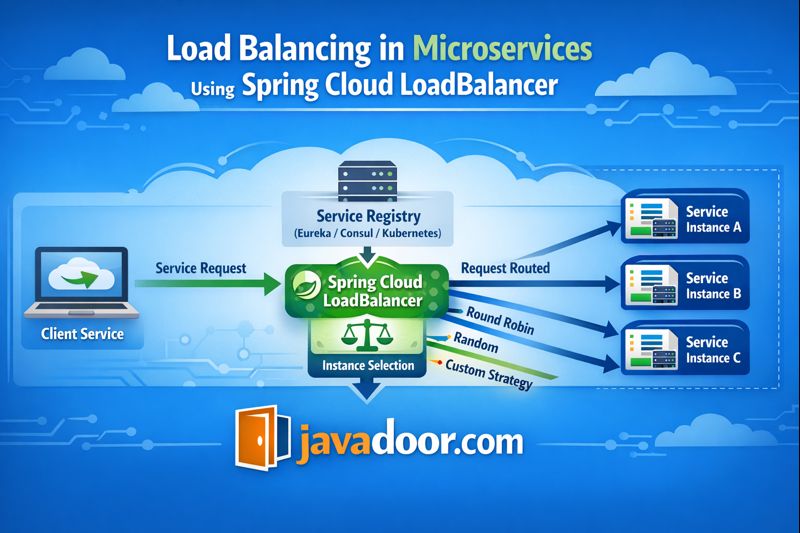
Load balancing means distributing incoming requests across multiple instances of a service to:
-
Improve performance
-
Increase availability
-
Avoid overloading a single instance
📌 Example:
Order Service has 3 instances → requests should be distributed among them.
🔹 Why Load Balancing is Needed?
Without load balancing:
-
One instance gets overloaded
-
Others remain idle
-
High latency & failures
🔹 Types of Load Balancing
1️⃣ Server-side Load Balancing
-
Load balancer sits before services
-
Example: Nginx, AWS ELB
2️⃣ Client-side Load Balancing (Spring approach)
-
Client decides which service instance to call
-
Uses service discovery (Eureka/Consul)
👉 Spring Cloud LoadBalancer = Client-side
🔹 What is Spring Cloud LoadBalancer?
It is the replacement of Netflix Ribbon.
It:
-
Works with service discovery
-
Chooses a service instance
-
Integrates with WebClient & Feign
🔹 How It Works (Flow)
-
Service registers with Eureka
-
Client asks Eureka for available instances
-
LoadBalancer selects one instance
-
Request is sent to that instance
🔹 Load Balancing Strategies
-
Round Robin (default)
-
Random
-
Custom (based on metadata, zone, etc.)
🔹 Example Configuration
1️⃣ Dependency
2️⃣ Using WebClient
3️⃣ With Feign Client
🔹 Real-World Example
💳 Payment Service has 5 instances
-
LoadBalancer distributes traffic
-
If one instance goes down → others continue
🔹 Spring Cloud LoadBalancer vs Ribbon
| Feature | Ribbon | Spring Cloud LoadBalancer |
|---|---|---|
| Status | Deprecated | Active |
| Reactive Support | Limited | Native |
| Spring Native | ❌ | ✅ |
🔥 Interview One-Liner
“Spring Cloud LoadBalancer provides client-side load balancing by selecting service instances dynamically using service discovery.”