
What happens if @PostConstruct throws an exception?
When a @PostConstruct method throws an exception in Spring, it is treated as a fatal bean initialization failure — and depending on where that bean sits in the dependency graph, it can bring down part or the entire application context.
This is one of the most dangerous places to put unstable logic.
Let’s go deep.
1. Where @PostConstruct Fits in the Lifecycle
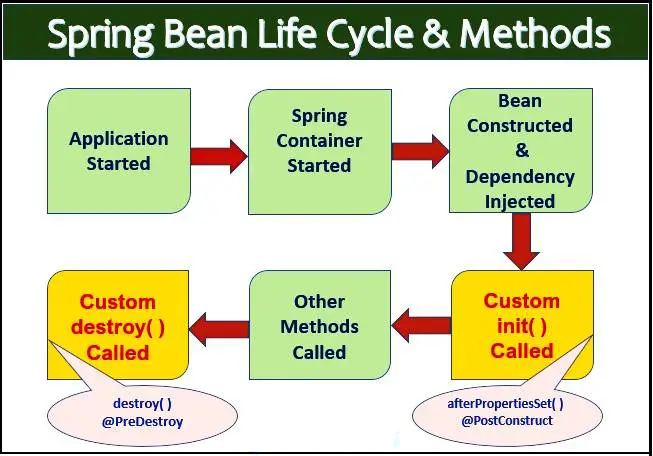
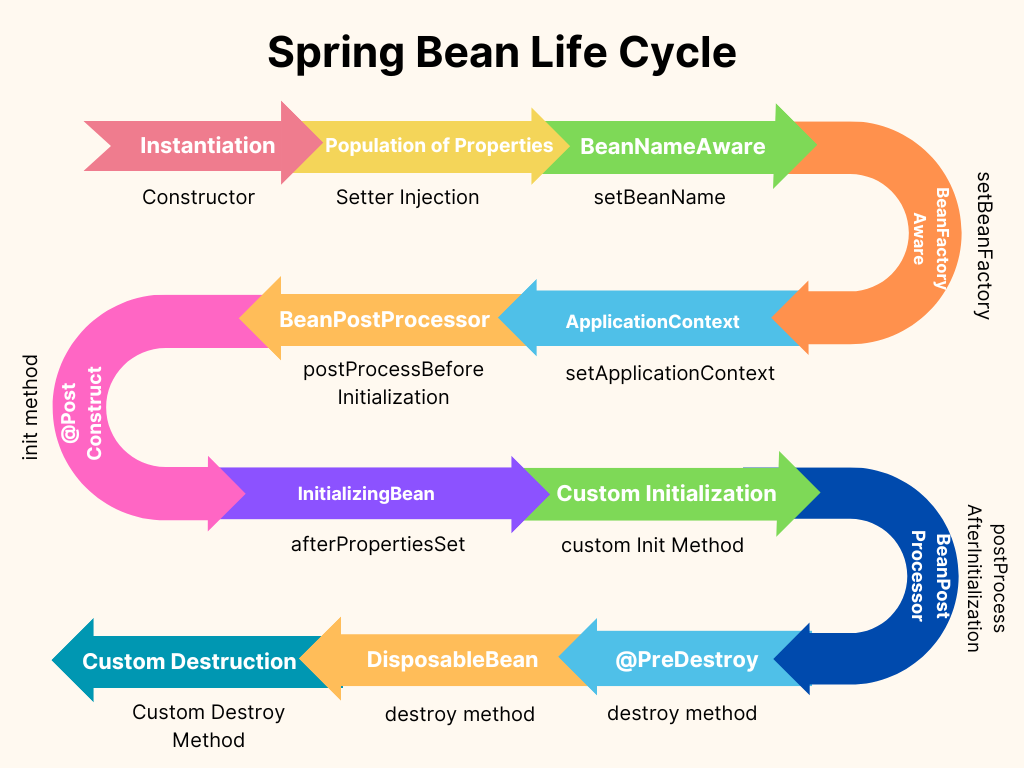
Spring bean lifecycle (simplified):
- Instantiate bean
- Inject dependencies
- Call
Awaremethods - Apply
BeanPostProcessor - Call
@PostConstruct - Bean ready for use

At this point:
- Bean is fully wired
- But context is not yet stable
2. What Exactly Happens on Exception?
Case 1 – Uncaught Exception
@PostConstruct
public void init() {
   throw new RuntimeException("DB down");
}
Spring behavior:
- Bean marked as failed
- Context startup aborts
- Application fails to start
You will see:
BeanCreationException: Error creating bean...
Caused by: RuntimeException: DB down
Case 2 – Checked Exception
@PostConstruct
public void init() throws IOException
This is wrapped into:
InvocationTargetException → BeanCreationException
Spring treats checked and unchecked the same.
3. Cascade Effect (The Real Danger)
If this bean is a dependency of others:
A depends on B
B fails in @PostConstruct
→ A never created
→ entire graph collapses
One bad init method can:
Kill 200 beans.
4. What Happens to the Application Context?
Spring:
- Stops refresh process
- Destroys already created beans
- Does NOT open web server
- Exits JVM (in Boot)
In Kubernetes:
- Pod crash-loop
- Endless restarts
5. Why @PostConstruct is a Bad Place for Risky Code
Because it’s:
- Not retryable
- Not transactional
- Not monitored
- Not fault tolerant
If it fails:
You get zero service.
6. Common Real-World Mistakes
6.1 Database Calls
@PostConstruct
loadAllUsers(); // DB down? App dead.
6.2 REST Calls
@PostConstruct
callExternalService();
6.3 File Access
@PostConstruct
readConfigFile();
7. Proper Alternatives (Professional Way)
Use ApplicationReadyEvent
@EventListener(ApplicationReadyEvent.class)
public void init() { ... }
Advantages:
- Context is stable
- Can retry
- Can fail gracefully
Use SmartLifecycle
public class MyService implements SmartLifecycle
Gives:
- start()
- stop()
- isAutoStartup()
Full control.
8. Can You Catch the Exception?
Yes, but it’s dangerous.
@PostConstruct
public void init() {
   try {
      riskyCall();
   } catch(Exception e) {
      log.error("Init failed", e);
   }
}
This:
- Keeps app alive
- But leaves bean in half-initialized state
Worst kind of bug.
9. Special Case: Lazy Beans
@Lazy
@Component
class HeavyBean { ... }
If @PostConstruct fails:
- App starts
- First user triggers failure
Even worse: production-only crash.
10. Transactional Is Ignored
@PostConstruct
@Transactional
public void init() { ... }
This does NOT work.
Because:
Proxies not fully applied yet.
No transaction exists.
11. Memory & Thread Side Effects
If exception occurs after:
- Opening threads
- Opening sockets
- Allocating buffers
Those resources may:
- Leak
- Never be cleaned
12. Professional Rules (Follow These)
| Rule |
|---|
| Never do I/O in @PostConstruct |
| Never call external systems |
| Never depend on network |
| Only validate config |
| Only wire internal state |
| Fail fast only for config errors |
13. Interview-Grade Answer (For You, Nimai)
“If a @PostConstruct method throws an exception, Spring treats it as a fatal bean creation failure. The bean is not registered, dependent beans fail, and the entire application context usually fails to start. In Spring Boot, this aborts startup and may cause crash loops in production.”
Final Mental Model
@PostConstruct is like static block for Spring beans.
If it fails:
JVM logic says: This object must not exist.
So Spring kills the world.
One-Line Golden Rule
If @PostConstruct can fail, it does not belong in @PostConstruct.